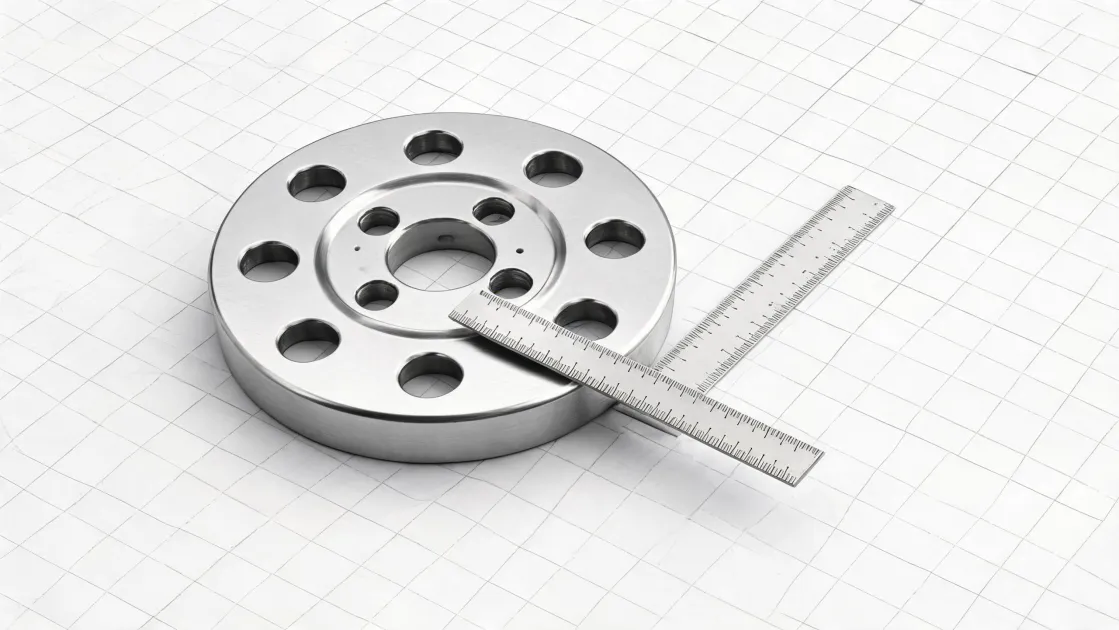
The cheapest front wheel hub assembly quote rarely stays the cheapest. I say that as someone who reviews 200+ front wheel hub assembly SKUs annually from roughly 14 suppliers in an automotive aftermarket components company. In 2024, I rejected 31% of first deliveries. Nearly every one traced back to the same decision: buying a part by piece price instead of buying a process by confirmed specification.
The problem you see is probably supplier quality. The deeper problem is that most B2B procurement teams compare front wheel hub assembly quotes in a way that was never set up to compare parts at all.
Why hub quote comparisons fail before the numbers even matter
"Front wheel hub assembly" is not a universal specification. It is not an interchangeable part number across factories. One supplier's "front wheel hub assembly" may include an integrated ABS sensor while another expects you to source it separately. Flange thickness, bearing preload, bolt-hole concentricity, and ABS ring alignment can all land inside "spec range" while still varying enough to matter at the assembly line or in the field.
Here's what actually happens: you have four quotes in front of you. They all look like they're offering the same product. You pick one. Eight weeks later, a batch arrives and the flange thickness is 0.6 mm thinner than the drawing you submitted.
Why? Because you compared price bands, not parts. And without a reference drawing with tolerances, suppliers fill in the gaps with whatever "industry standard" they already use.
The missing drawing
Did you ask for a front wheel hub assembly drawing from your supplier? Most buyers don't. They rely on cross-reference numbers, catalog images, or "same as last time." But none of those carry tolerances. And without a drawing, you can't verify flange thickness, concentricity, bolt-hole diameter, or ABS ring runout—the exact variables that determine whether a hub assembly survives 50,000 miles or fails at 15,000.
Which is why comparing a China front wheel hub assembly diagram supplier isn't really about geography. Whether you're reviewing drawings from a Chinese supplier or quotes from a domestic aftermarket brand, the missing drawing is the same underlying defect.
When you evaluate Timken front wheel hub assembly sourcing options, you might start with the authorization question. Fair enough. But the more fundamental question is: can you get the same tolerance drawing across every brand you're considering? A brand name is not a substitute for a control plan.
The cost you didn't put in the comparison
Let me make this concrete. In Q3 2023, we received 200 front wheel hub assemblies from a newly approved supplier. The flange thickness measured 14.2 mm against our drawing specification of 14.8 mm ±0.3 mm. The supplier called the 0.6 mm gap "within industry standard." We rejected the batch. They redid it at their cost. We absorbed the delay—a six-week production schedule compressed into three.
That quality miss cost us roughly $8,000 in expedited freight and labor rescheduling—money we never compared in the quote.
Looking back, I should have paid for a drawing verification before approving that supplier. At the time, their samples looked fine, their price was the lowest, and we had a few weeks of buffer. My choice was reasonable given what I knew—a good-looking sample and a clean price sheet. Hindsight just makes it look obvious.
I'd made the opposite mistake earlier. I assumed "same specifications" meant identical results across vendors. Didn't verify. Turned out each factory had a slightly different interpretation of "standard tolerance"—and those differences compound fast.
They warned me to check the tolerance sheet before approving. I didn't listen. The 14.2 mm batch cost me $8,000 and a month of production time. Now every contract includes the drawing revision in force.
Even after choosing the replacement supplier, I kept second-guessing. What if their quality control wasn't as good as the samples? The six weeks until the first delivery passed inspection were stressful.
What to actually compare
The process isn't complicated. It's just different from what most people do.
First, ask for a drawing with tolerances. Not a catalog image. Not a cross-reference list. A revision-controlled drawing showing allowed variance for flange thickness, bearing preload range, bolt-hole diameter, and ABS ring alignment. If a supplier can't produce one, that is the answer.
Second, audit the control plan. According to IATF 16949 (the automotive quality management standard maintained by the International Automotive Task Force), every part number requires a documented control plan—but a supplier doesn't have to hand it over unless you ask for it in the contract.
Third, calculate TCO instead of piece price. Total cost of ownership (i.e., not just the unit price but everything you pay to make that part usable) includes freight, duties, incoming inspection, warranty replacement rates, rejection risk, and the cost of delays. Hidden costs add up fast (like expedited freight, sorting labor, and warranty replacement rates you didn't factor in). Once you plug in those variables, a $4 gap between quotes can flip.
If you're comparing Timken front wheel hub assembly supplier quotes, brand familiarity may shape where you start the search. But it shouldn't change what you ask each supplier for.
That's how to compare front wheel hub assembly supplier quotes—not by ranking piece price, but by ranking who can produce verifiable documentation on three fronts. The supplier who can hand over a revision-controlled drawing and a recent control-plan audit may not be the cheapest per piece. In my experience, it is usually the lowest total cost.
